 Ultimate guide
Graphene Topical Cream Side Effects: What to Know
Table of Contents
- What Side Effects Can Graphene Cream Cause?
- Graphene Oxide Skin Safety: Why the Distinction Matters
- Graphene Nanoparticles Skin Absorption: What the Research Shows
- Graphene Cream Skin Irritation: Recognizing the Signs
- How to Patch Test a Topical Cream Before Full Use
- Reading the Label: Finding Graphene and Its Relatives
- What to Do After a Suspected Skin Reaction
- Conclusion
- Frequently Asked Questions
Last Updated: October 18, 2026
What Side Effects Can Graphene Cream Cause?
Graphene topical cream side effects are mostly mild and localized: redness, itching, tingling, or a temporary rash at the application site. Most reported concerns trace to the type of graphene used, the concentration in the formula, and the condition of the skin it touches. At Graphoenix LLC, we work with pristine large-flake graphene, and we think the material distinction matters more than most shoppers realize. Below, we break down what the research actually says, how to patch test properly, and when a reaction deserves a doctor's attention rather than another layer of cream.
The honest answer is that finished consumer creams have very little direct safety literature behind them. Most evidence comes from laboratory work on graphene materials in general. That gap matters, and we will not pretend otherwise.
Material Type Decides the Risk Profile
Not all graphene is the same substance, and the label rarely tells you which one you have. Graphene is a single-atom-thick sheet of carbon. Graphene oxide (GO) is that sheet heavily oxidized, and reduced graphene oxide (rGO) is GO after chemical or thermal reduction. Research on nanomaterials consistently flags GO as the more reactive form in biological systems, largely because of its surface chemistry and how it disperses in water.
That is the core tension in this category: the name on the jar says "graphene," but the safety profile depends on which relative is inside. A cream built on pristine, low-layer graphene is a different proposition from one built on oxide-heavy powder. Ask the manufacturer which one they use. A vague answer is your answer.
Graphene Oxide Skin Safety: Why the Distinction Matters
Graphene oxide skin safety concerns center on reactivity, not absorption alone. Laboratory studies on skin models suggest GO can provoke oxidative stress and inflammatory signaling in cells, particularly at higher concentrations. The National Library of Medicine toxicology literature on graphene-family nanomaterials documents pro-inflammatory responses across several nanomaterial types, and graphene oxide appears among the more reactive.
Does that mean a GO-containing cream will irritate your skin? Not automatically. Dose, concentration, particle size, and formulation all change the outcome. But it does mean the burden of proof sits with the maker, not the buyer.
Graphene Nanoparticles Skin Absorption: What the Research Shows
Graphene nanoparticles skin absorption is the question nobody can answer with confidence for consumer products. What exists is laboratory work: ex-vivo studies on human skin samples, in-vitro validation on cultured cells, and animal studies. These suggest penetration depends heavily on particle size, surface chemistry, and skin condition. Intact skin is a formidable barrier. Compromised skin is not.
The National Institute for Occupational Safety and Health guidance on engineered nanomaterials treats occupational exposure as the better-studied scenario, with inhalation and dermal contact as the primary routes of concern in manufacturing settings. That is a different exposure profile from a pea-sized dab of cream, and conflating the two leads to bad conclusions in both directions.
Our read: the absorption question is genuinely open, which is exactly why concentration and formulation transparency matter so much.
Graphene Cream Skin Irritation: Recognizing the Signs
Graphene cream skin irritation usually shows up as contact dermatitis: redness, warmth, itching, or a raised rash confined to where you applied the product. Tingling in the first few minutes is common with many topical formulations and often fades. A reaction that spreads, blisters, or worsens after 24 hours is a different category and warrants stopping use.
Intact, Irritated, and Broken Skin Are Not the Same
Skin barrier status changes everything. On intact skin, most topical ingredients stay in the upper layers. On irritated skin, penetration increases. On broken skin, a burn, a fresh cut, or a healing tattoo, you have effectively removed the barrier that was doing the work.
- Intact skin: lowest risk, standard patch test applies
- Irritated skin: eczema flare, razor burn, sunburn, higher reactivity
- Broken skin: open wounds, blisters, post-procedure sites, do not apply without medical guidance
If you have severe eczema that flares unpredictably, test on a small area during a calm period, not mid-flare. That single change in timing prevents most bad experiences.
How to Patch Test a Topical Cream Before Full Use
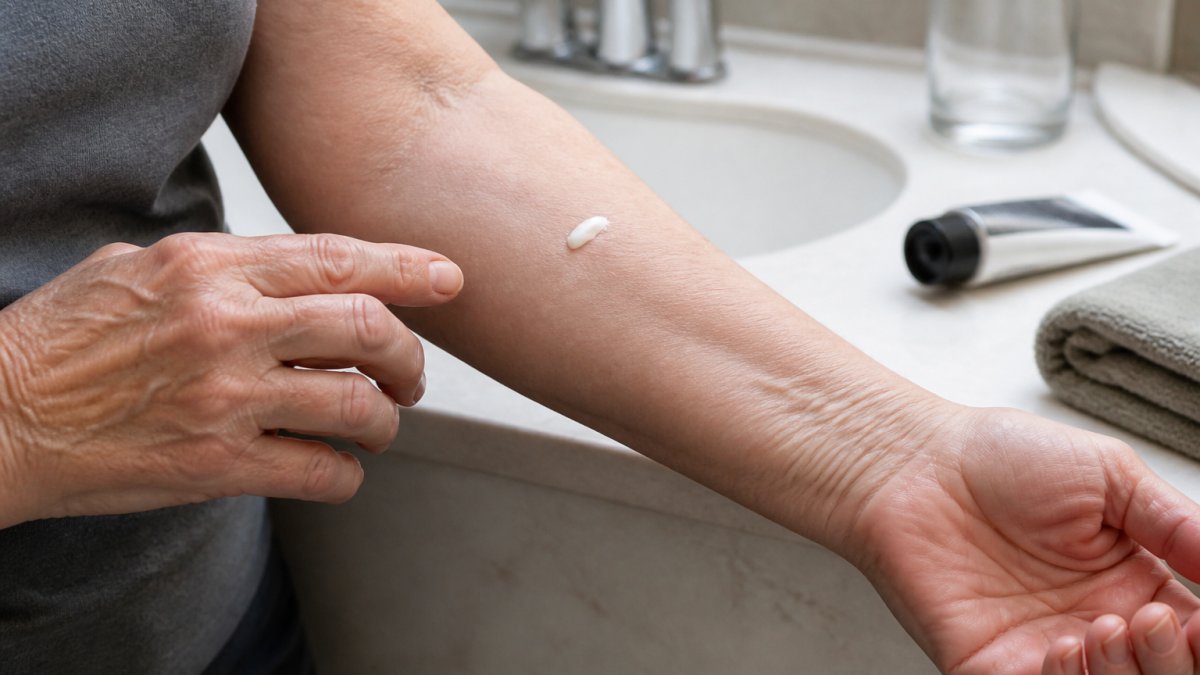
A proper patch test takes three days and answers the only question that matters for your skin. Here is the protocol we recommend:
- Day 1, morning: apply a small amount, roughly the size of a grain of rice, to the inner forearm. Leave it uncovered.
- Day 1, evening: check for redness, itching, or swelling. Note anything, even mild tingling.
- Day 2: leave the area alone. Delayed reactions are common and show up 24 to 48 hours later.
- Day 3: if the site is clear, apply a second small amount to the same spot and repeat the 48-hour observation.
- Clear on both rounds? Proceed to normal use, starting with a thin layer on the target area.
Stop immediately if you see blistering, spreading redness, or swelling beyond the test site. The American Academy of Dermatology guidance on patch testing covers the same principle for suspected contact allergens, and it applies here.
Reading the Label: Finding Graphene and Its Relatives
Ingredient labels are where this category gets murky. Look for these terms:
- Graphene, graphene oxide, reduced graphene oxide: the material family
- Carbon black, activated charcoal: different materials entirely, sometimes marketed alongside graphene
- "Nanocarbon" or "carbon technology": marketing language, not a standardized ingredient name
A label that says only "graphene technology" without naming the form leaves you guessing. Reputable makers will tell you the layer count, the flake size, and whether the material is oxide-based. At Graphoenix LLC, we specify pristine large-flake 1-5 layer graphene, because the form is the formula.
What to Do After a Suspected Skin Reaction
Stop using the product. That is step one, and it is not negotiable. Wash the area with lukewarm water and a mild, fragrance-free cleanser, pat dry, and leave it alone. Do not apply another cream on top to "calm it down," because you lose the ability to tell what is helping and what is worsening.
- Mild redness or itching: stop use, monitor for 48 hours, apply a cool compress
- Spreading rash or swelling: contact a healthcare provider
- Blistering, facial swelling, or trouble breathing: seek urgent care immediately
Bring the product with you to any appointment. The ingredient list is diagnostic information. If the reaction clears, do not restart the cream without medical clearance, and report the reaction to the manufacturer so the batch can be tracked.
Conclusion
The uncomfortable truth about graphene topical cream side effects is that the evidence base is thinner than the marketing suggests. Most safety data comes from laboratory and occupational research, not from finished consumer products. That does not make graphene creams unsafe. It makes label transparency the deciding factor.
We built Graphoenix LLC around a specific material choice: pristine large-flake 1-5 layer graphene, not graphene oxide. Our formulations are designed to support itching, pain, and mobility while acting as a lattice for cellular regrowth, and we are direct about what we use because the distinction is the whole point. If you have sensitive skin, patch test first, start slow, and ask us the hard questions before you buy.
Frequently Asked Questions
Can graphene topical cream cause skin irritation or an allergic reaction?
It can, though the likelihood depends on the formulation and the material inside it. Creams built on graphene oxide carry more documented irritation and pro-inflammatory concern than those using pristine graphene flakes. Reactions typically show up as redness, stinging, itching, or a raised rash within minutes to a few hours of application. A patch test on your inner forearm, repeated over two to three days, is the simplest way to find out how your skin responds before you apply graphene cream to a larger area.
Can graphene nanoparticles pass through human skin?
Research on graphene nanoparticles skin absorption suggests penetration is limited when the skin barrier is intact, but the picture changes with damaged skin. Studies using skin models show that particles can move deeper when the outermost layer is compromised by cuts, eczema flares, or abrasion. Size, shape, and surface chemistry all affect how far material travels. This is one reason graphene cream skin irritation risk is higher on broken skin, and why applying any graphene product to an open wound without medical guidance is unwise.
How can I check the ingredients and safety information for a graphene cream?
Start with the full ingredient list, not the front label. Look for terms like graphene, graphene oxide, reduced graphene oxide, or graphene nanoplatelets, and note where they sit in the list. Check whether the product states which form of graphene it uses, since graphene oxide skin safety concerns differ from those of pristine graphene. A manufacturer that publishes its material specifications and offers a clear customer contact route is easier to evaluate than one that only markets the word graphene.
What should I do if a topical cream causes a rash or burning?
Stop using the product immediately and wash the area with lukewarm water and a mild cleanser. Avoid scrubbing or applying other creams over the reaction. Cool compresses can ease discomfort, and an over-the-counter hydrocortisone cream may help mild redness. If you develop swelling, blisters, spreading redness, fever, or trouble breathing, seek urgent medical care, as these can signal a serious reaction. Bring the product packaging to any medical appointment so the clinician can see the full ingredient list.
Are the side effects of graphene cream well studied in humans?
Not yet. Most available evidence comes from laboratory studies, skin models, and animal research rather than large human trials of finished consumer creams. That means the science describes how graphene materials behave in controlled settings, not how a specific product will affect you. Treat claims of guaranteed safety or guaranteed results with caution. The practical takeaway is to patch test, start with a small area, and watch your skin closely during the first week of use.
Skin that reacts badly to one cream often reacts badly to the next, and guessing gets expensive. Graphoenix LLC formulates with pristine large-flake graphene rather than oxide forms, designed to support itching, pain, and mobility while acting as a lattice for cellular regrowth. Start with a patch test, then explore the full range and see how a transparently made graphene cream fits your routine.