 How-to
How to Fix Stiff Joints After Sitting: 7 Simple Steps
Table of Contents
- Why Your Joints Stiffen After Sitting
- A 5-Minute Routine to Fix Stiff Joints After Sitting
- Exercises for Stiff Joints That Loosen You Up
- How to Alleviate Stiff Joints With Heat and Self-Care
- Preventing Joint Stiffness After Inactivity
- When to See a Doctor About Joint Stiffness
- Conclusion: Build a Daily Movement Habit
- Frequently Asked Questions
Last Updated: October 19, 2026
Why Your Joints Stiffen After Sitting
Joint stiffness after sitting is a temporary loss of easy movement caused by reduced circulation and fluid buildup around the joint. It usually eases within a few minutes of moving. This guide explains exactly how to fix stiff joints after sitting, with a timed routine you can start today.
Here's the key point most people miss: stiffness after sitting is often a signal, not a sentence. It tells you the joint needs blood flow and motion.
Common Causes of Stiff Joints
The most common causes of stiff joints are inactivity, prolonged sitting, and normal age-related joint wear. Muscle stiffness builds when a joint stays in one position too long.
Other frequent triggers include:
- Sitting in the same posture for hours
- Cold rooms that tighten muscles
- Dehydration, which affects joint fluid
- Weak muscles that can't support the joint
- Recent overuse from exercise or chores
A common mistake is stretching hard the moment you stand. Cold tissue doesn't like sudden force. Gentle movement first, stretch second.
Arthritis and Morning Stiffness
Arthritis-related stiffness behaves differently from stiffness after inactivity. Morning stiffness from osteoarthritis usually loosens within 30 minutes of moving. Stiffness that lasts longer deserves a doctor's look.
The Arthritis Foundation guide to arthritis symptoms notes that morning stiffness lasting over an hour is a reason to get checked. That duration is the detail most guides skip.
A 5-Minute Routine to Fix Stiff Joints After Sitting
The fastest way to fix stiff joints after sitting is a five-minute sequence of gentle movement, done in order, starting the moment you stand. Move before you stretch. Blood flow comes first.

Minute 1: Stand and shift weight. Hold the chair back. Shift side to side, ten times.
Minute 2: Arm sweeps. Raise both arms overhead and lower them slowly. Repeat eight times.
Minute 3: Seated or standing march. Lift each knee to a comfortable height, twenty total.
Minute 4: Gentle back bend. Place hands on hips and lean back slightly. Hold five seconds, three times.
Minute 5: Shoulder rolls and neck turns. Ten rolls back, five slow turns each way.
Exercises for Stiff Joints That Loosen You Up
The best exercises for stiff joints combine gentle movement, stretching, and low-impact aerobic exercise. Start with range of motion, then add light stretching. But the single biggest mistake is treating all joints the same. A hip that stiffens after sitting needs different care than a hand or a low back. Use the joint-specific modifications below to target the area that actually feels stuck.
Gentle Movement and Stretching
Gentle movement restores circulation and joint fluid. Stretching follows once the joint feels warmer. Hold each stretch 15 to 30 seconds. Never bounce.
- Shoulders: arm circles, then a doorway stretch
- Back: seated back bend, then a gentle twist
- Legs: chair pose sits, then a standing calf stretch
- Hips: seated knee lifts, then a supported lunge
Joint-Specific Modifications
Symptoms can have different causes, so adapt each movement to the joint that bothers you. Stop if you feel sharp or worsening pain.
- Hips: After sitting, the hip flexors shorten. Try a seated figure-4 stretch: sit tall, cross one ankle over the opposite knee, and lean forward gently until you feel a stretch in the buttock. Hold 20 seconds per side. For a standing option, place one foot on a low step behind you and tuck your pelvis until you feel a stretch at the front of the hip.
- Knees: Avoid deep squats right after sitting. Instead, do seated leg extensions: sit in a chair, straighten one leg slowly, hold for 5 seconds, and lower. Repeat 10 times per leg. Then try a standing hamstring stretch with your heel on the floor and toes up.
- Ankles: Ankle pumps while seated, point and flex your foot 15 times, restore circulation before you stand. Then do standing calf raises holding a counter for balance.
- Hands: Open and close your fists 10 times, then gently stretch each finger backward. For stiffness after typing or gripping, try a "finger ladder": touch your thumb to each fingertip in sequence.
- Low back: A seated pelvic tilt, rock your pelvis forward and back, loosens the lumbar spine without straining it. Follow with a gentle seated twist, holding the chair back for support.
Low-Impact Aerobic Exercise
Low-impact aerobic exercise keeps joints lubricated between sitting bouts. Walking, swimming, and cycling are the standard picks. The CDC physical activity guidance recommends regular moderate movement for adults managing joint pain. A 10-minute walk after long sitting does more for stiffness relief than any single stretch.
Safety and Accessibility
If you have limited mobility or balance concerns, do every movement seated or holding a stable surface. Chair-based options work: seated marches, seated leg extensions, and seated twists all raise blood flow without fall risk. A physical therapist can tailor a program to your specific joints and limitations. Most practitioners find that a short, consistent routine beats an intense session once a week.
How to Alleviate Stiff Joints With Heat and Self-Care
Heat is the simplest way to alleviate stiff joints before movement. A warm shower or heating pad relaxes muscles and improves circulation.
Try this order:
- Apply heat for 10 minutes
- Do the five-minute routine
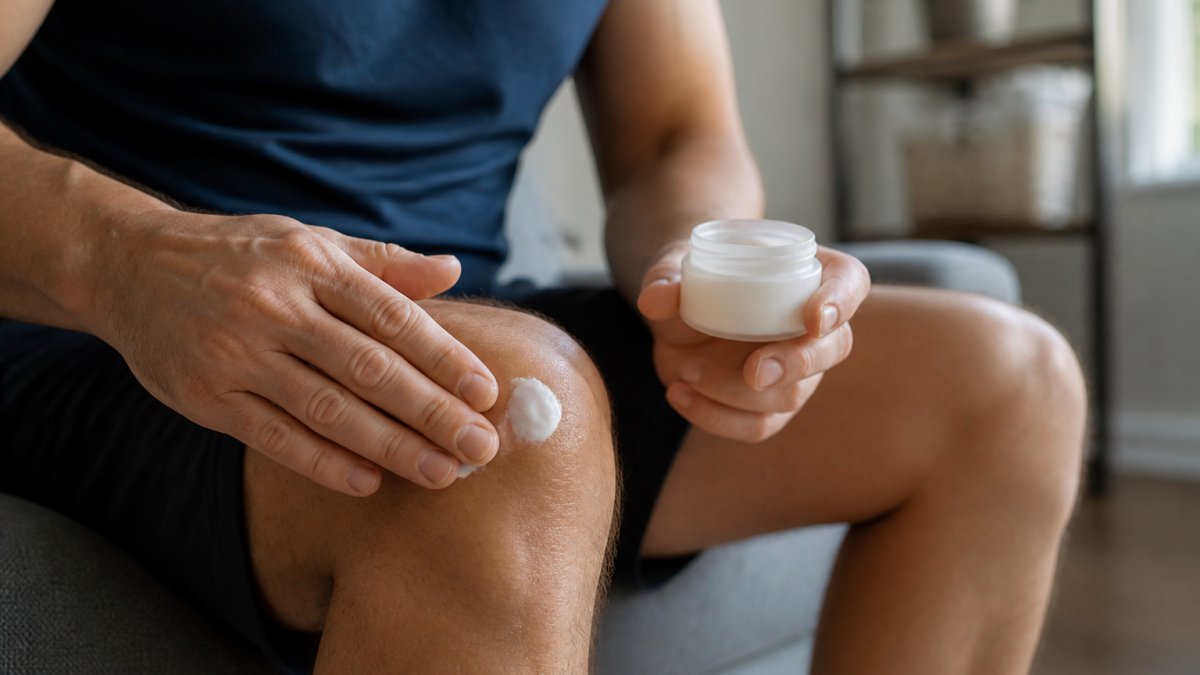
- Use a topical comfort product if needed
For topical support, our graphene-based joint comfort products are designed to assist with pain and mobility. They use pristine large-flake graphene rather than graphene oxide.
Preventing Joint Stiffness After Inactivity
Prevention during prolonged sitting beats fixing stiffness later. Small changes every 30 minutes keep joints from locking up. But "stand up more" is not a plan. Use this concrete movement-break protocol and workstation checklist to reduce stiffness before it starts.
A Timed Movement-Break Protocol
Set a timer for every 30 minutes. When it goes off, do one of these 60-second breaks, rotating through them:
- Stand and shift: Stand, shift weight side to side 10 times, then sit.
- Seated march: Lift each knee 10 times while seated.
- Shoulder roll and neck turn: 10 shoulder rolls back, 5 slow neck turns each way.
- Ankle pumps: Point and flex both feet 15 times.
- Standing back bend: Hands on hips, lean back gently for 5 seconds, three times.
A common pattern is that people quit at 90 seconds of movement, right before the joint actually loosens. The timer keeps you honest.
Workstation Setup That Reduces Stiffness
Posture matters, but movement matters more. A perfect posture held for three hours still stiffens joints. Still, a few adjustments reduce the load:
- Keep feet flat, knees near 90 degrees
- Adjust chair height so hips sit level with knees
- Support the low back with a cushion or the chair's lumbar curve
- Keep the screen at eye level to avoid neck strain
- Roll shoulders back every 15 minutes
- Drink water through the day, dehydration affects joint fluid
Vary Your Posture
Even good posture becomes a problem if you never change it. Alternate between sitting, standing (using a standing desk or a counter), and walking. If you can, take a 2-minute walk every hour. A 10-minute walk after long sitting does more for stiffness relief than any single stretch.
When to See a Doctor About Joint Stiffness
See a doctor when stiffness lasts more than an hour, comes with joint swelling, or limits daily activities. Those signs point to an underlying cause beyond simple inactivity.
Seek care promptly for:
- Red, hot, or swollen joints
- Stiffness with fever
- Pain that wakes you at night
- Stiffness in one joint only, worsening over weeks
A joint examination may include blood tests or joint fluid analysis. The NIAMS arthritis overview outlines when symptoms warrant evaluation.
Conclusion: Build a Daily Movement Habit
Stiff joints after sitting respond best to consistency, not intensity. A five-minute routine, done every time you rise from a long sit, changes how your joints feel within weeks.
At Graphoenix LLC, our topical products use large-flake graphene to assist with pain and mobility, and they act as a lattice for cellular regrowth. If stiffness is part of your daily life, pair the routine above with a product designed to work alongside it.
Shop Now and give your joints the support they've been missing.
Frequently Asked Questions
How long does stiffness after sitting usually last?
For most people, stiffness after sitting eases within 5 to 15 minutes of moving around. If it regularly lasts longer than 30 minutes or comes with swelling or pain, that is a sign to talk to a doctor. Morning stiffness that lingers past an hour is often linked to inflammatory conditions like arthritis, so tracking how long it takes to loosen up can help your doctor pinpoint the cause.
What gentle exercises can help loosen stiff joints?
Start with slow arm sweeps, shoulder rolls, and seated leg extensions. Add a standing back bend and a gentle chair pose to open the hips. Stretching major muscle groups for 20 to 30 seconds each improves flexibility and range of motion. Pair these exercises for stiff joints with a short walk or a few minutes of cycling to boost circulation and reduce muscle stiffness.
Can arthritis cause stiffness after sitting?
Yes. Osteoarthritis and other forms of arthritis commonly cause stiff joints after inactivity, especially in the knees, hips, and hands. The stiffness often comes with joint pain and swelling. Gentle movement, low-impact exercise like swimming or walking, and heat therapy can help manage symptoms. If stiffness lasts more than an hour or worsens over time, ask your doctor about a joint examination and blood tests.
What can I do to prevent stiffness during long periods of sitting?
Stand up and move every 30 to 45 minutes, even if it is just a short walk to the kitchen. Keep your posture supported with feet flat and a cushion behind your lower back. Do seated shoulder rolls and ankle pumps while you work. Staying hydrated and using a warm shower or heat pack before long sitting sessions can also reduce joint stiffness after inactivity.