 How-to
How Fast Does Topical Pain Relief Work? A 2026 Guide
Table of Contents
- How Fast Does Topical Pain Relief Work? The Short Answer
- How Topical Analgesics Work: From Skin to Pain Source
- Ingredient-by-Ingredient Onset Timeline
- How Long Does Pain Relief Cream Last? Duration by Formulation
- Pain Relief Gel vs Cream vs Spray: Which Works Faster?
- How to Apply Topical Pain Reliever for Faster Onset
- What to Do When Topical Pain Relief Doesn't Start Working
- Frequently Asked Questions
Last Updated: October 14, 2026
How Fast Does Topical Pain Relief Work? The Short Answer
Most topical pain relief starts working within 5 to 30 minutes, depending on the active ingredient and form. Cooling sprays and gels act fastest (5 to 10 minutes); creams and salves take 20 to 30 minutes.
Anyone promising instant relief from a cream is overselling it.
This guide from Graphoenix LLC breaks down how fast topical pain relief works, ingredient by ingredient.
How Topical Analgesics Work: From Skin to Pain Source
A topical analgesic is a pain-relieving product you apply directly to your skin over a sore muscle or joint, working at the source of the pain instead of traveling through your whole body.
That's the core difference from a pill: an oral painkiller goes through your stomach and bloodstream before reaching the sore spot, while a topical product seeps into the skin and reaches the tissue underneath.
Most topical products fall into two groups:
- Counterirritants like menthol and camphor. These create a cooling or warming feeling that distracts your nerves from the pain.
- NSAID gels like diclofenac. These reduce inflammation in the tissue beneath the skin.
The feeling and the relief are not the same thing. A strong tingle just means your nerve endings noticed the product.
The Role of Skin Absorption and the Stratum Corneum
Your skin is built to keep things out. The outer layer, the stratum corneum, is the main barrier, tightly packed dead skin cells that block most substances.
This is why onset time varies so much. Thin skin, like on the wrist or behind the knee, absorbs faster; thick, calloused skin on the heel absorbs slowly.
Warm, damp skin absorbs better than cold, dry skin, a fact that explains many timing differences between products.
Ingredient-by-Ingredient Onset Timeline
Different active ingredients reach their peak at different speeds. Here's what to expect from the most common options.
| Active Ingredient | Typical Onset | How Long It Lasts | Best For |
|---|---|---|---|
| Menthol | 5-10 minutes | 30-60 minutes | Fast cooling, muscle soreness |
| Camphor | 5-15 minutes | 30-90 minutes | Warming relief, stiffness |
| Lidocaine | 10-20 minutes | 1-3 hours | Numbing sharp, localized pain |
| Diclofenac gel | 30-60 minutes | 4-6 hours | Joint pain, inflammation |
| Capsaicin | 20-40 minutes | 2-4 hours | Chronic pain, long-term use |
Menthol and camphor act fast because they work on nerve endings at the surface, but that feeling fades quickly.
Diclofenac takes longer to kick in, often a full hour, but lasts much longer and tackles inflammation, not just sensation.
Capsaicin often feels worse before it feels better, and can take several days of regular use before you notice real relief.
How Long Does Pain Relief Cream Last? Duration by Formulation
A pain relief cream typically lasts 1 to 4 hours. Menthol creams fade in about an hour; diclofenac creams can hold for 4 to 6 hours.
Formulation matters as much as the ingredient:
- Creams: Rich and moisturizing. Absorb slowly, last a moderate time.
- Gels: Light and water-based. Absorb fast, dry quickly, often act sooner.
- Sprays: Thin and fast-drying. Quick to apply, shorter-lasting.
For chronic aches, a salve or diclofenac cream fits better; for fast relief after a workout, a gel or spray wins.
Pain Relief Gel vs Cream vs Spray: Which Works Faster?
A gel usually works faster than a cream or spray. Gels are water-based, so they soak in quickly and reach the tissue below in minutes.
Here's the quick version:
- Gel: Fastest absorption, good for acute soreness and sports aches.
- Cream: Slower absorption, better for dry skin and daily joint pain.
- Spray: Fastest to apply, best for hard-to-reach spots and quick touch-ups.
The gel vs cream choice comes down to your skin and goal.
Sprays are handy for the back or shoulders, where rubbing in a cream is awkward. But they cover a smaller, less controlled area, so you may need more than one pass.
Match the form to the job.
How to Apply Topical Pain Reliever for Faster Onset
You can speed up how fast topical pain relief works with the right application, but the method depends on the active ingredient, a menthol gel and a diclofenac gel do not follow the same playbook.
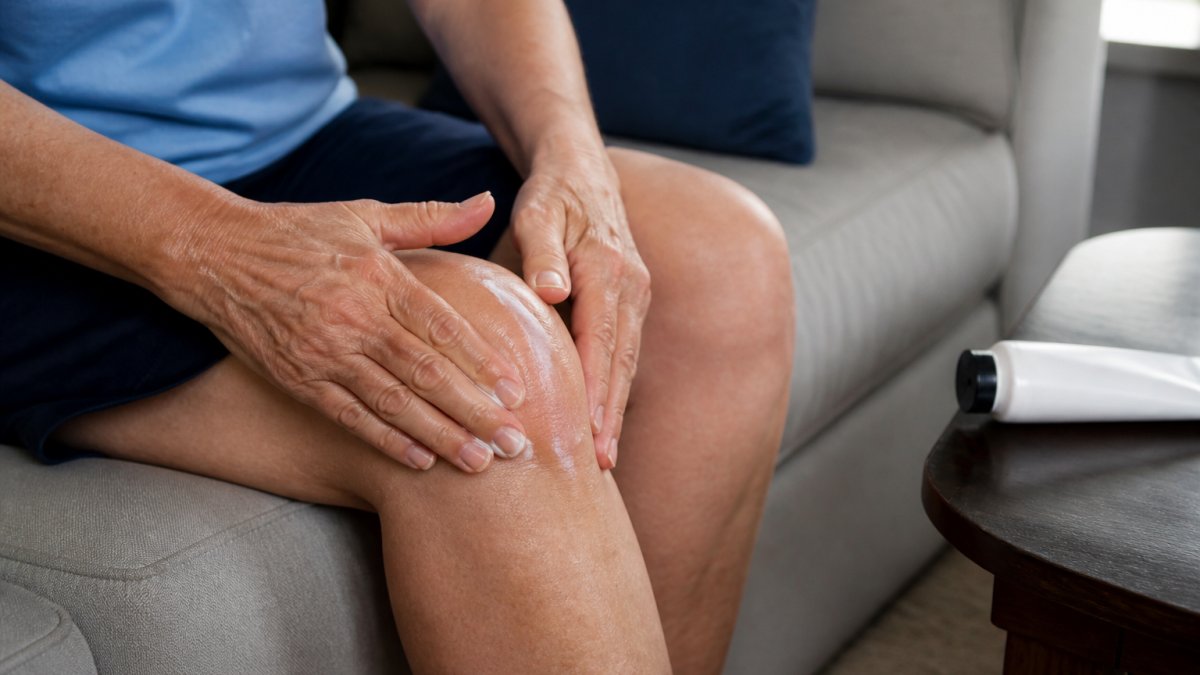
General steps that apply to most products
- Wash and dry the area. Clean skin absorbs better than skin with lotion or oil on it.
- Warm the skin first. A warm shower or a warm cloth opens the surface and boosts absorption.
- Use the right amount. More is not better. Follow the label, usually a thin layer over the sore spot.
- Massage it in. Rub gently for 30 to 60 seconds to work the product into the skin.
- Wash your hands after. This stops you from accidentally rubbing it into your eyes.
- Wait before covering. Give it a few minutes to absorb before you add clothing or a wrap.
- Reapply on schedule. Follow the label's timing, not your impatience.
A common mistake is slathering on too much. A thick layer just sits on the surface and doesn't absorb faster; a thin, well-rubbed layer beats a heavy one every time.
Ingredient-specific application rules
Each ingredient class has its own rules that change how fast, and how safely, it works.
Counterirritants (menthol, camphor, methyl salicylate). These work on the surface, so timing is about contact, not absorption.
Lidocaine patches and creams. These numb the surface, so they work best on intact skin over the painful area.
Capsaicin. Apply a thin layer and wash your hands thoroughly afterward, capsaicin in the eyes is extremely painful.
Timing tips that actually change onset
- Apply to warm, damp skin. A warm shower first can shave minutes off absorption for creams and gels.
- Match the amount to the area. A pea-sized amount for a small joint, a thin film for a larger muscle group.
- Do not double up. Applying two different topicals to the same spot increases the risk of irritation and interactions without speeding relief.
What to Do When Topical Pain Relief Doesn't Start Working
If nothing happens after 30 to 60 minutes, don't keep piling on more product. Stop and check a few things first, a structured troubleshooting sequence separates a product problem from a pain problem.
Step 1: Check the label and the clock
Different ingredients have different onset windows. A diclofenac gel applied 20 minutes ago is still inside the normal window, it often takes a full hour. A menthol gel applied 20 minutes ago with no sensation means something is off.
- Counterirritants (menthol, camphor): You should feel cooling or warming within 5 to 15 minutes. No sensation at all usually means too little product, too thick a callus, or an expired product.
- Lidocaine: Numbing should begin within 10 to 20 minutes. If the area is still sharp after 30 minutes, the product may not be reaching the nerve depth that is causing the pain.
- Topical NSAIDs (diclofenac): Allow a full 60 minutes before judging. Relief builds over the first few days of regular use for joint pain.
Step 2: Check your application
- Did I apply it to the right spot? Pain at the source responds best. For knee arthritis, that means around the joint line, not the middle of the thigh.
- Is my skin too dry or too cold? Warm, damp skin absorbs far better. Cold, dry, calloused skin can block absorption.
- Is the ingredient strong enough for this pain? Mild soreness and deep joint pain need different products. A cooling counterirritant won't do much for deep arthritis inflammation. An NSAID gel won't help much with a surface nerve tingle.
Step 3: Separate sensation from relief
A strong cooling or warming sensation means your nerve endings noticed the product, not that the underlying pain improved. If the tingle fades and the pain remains, the product is distracting you, not treating you. That is legitimate for mild soreness, but not the same as reducing inflammation or numbing a nerve.
If you need actual pain reduction, not just a distraction, you likely need a topical NSAID, lidocaine, or a clinician-guided approach.
Step 4: Watch for skin reactions and stop signals
- Redness, burning, itching, or a rash that persists after washing: stop using the product and wash the area with mild soap and water.
- Blistering or severe burning: stop immediately and seek medical advice.
- Signs of an allergic reaction such as swelling of the face, lips, or throat, or difficulty breathing: seek emergency care.
Never apply a topical product to broken skin, a wound, or a rash unless the label says it is safe.
Step 5: Know when to see a healthcare provider
Topical products manage symptoms, not causes. See a healthcare provider if:
- Pain is severe, sudden, or follows an injury.
- Pain lasts for weeks or keeps getting worse.
- Pain comes with swelling, redness, warmth, numbness, tingling, or weakness.
A topical NSAID can still enter the bloodstream, so it is not risk-free just because you rub it on. If you use one regularly, talk to a clinician about total NSAID exposure across all products you take.
At Graphoenix LLC, we build our skin and joint comfort products around pristine, large-flake graphene nanocarbon technology. Our topical applications help with itching, pain, and mobility. The graphene acts as a lattice that supports cellular regrowth, and our formulas avoid the potentially toxic graphene oxide found in some other products.
Frequently Asked Questions
How quickly should a pain relief cream start working?
Most pain relief creams begin working within 15 to 30 minutes. Cooling ingredients like menthol often produce a sensation within 5 to 10 minutes, while anti-inflammatory ingredients such as diclofenac may take 30 to 60 minutes to reduce pain signals. Onset depends on the active ingredient, the formulation, skin thickness at the application site, and how thoroughly you massage the product into the skin.
How long does topical pain relief usually last?
Duration varies by formulation. Gels and solutions tend to last 2 to 4 hours, while creams and salves can provide 4 to 6 hours of relief. Some prescription-strength formulations last up to 12 hours. Reapply according to the product label, and never exceed the recommended daily dosage. If pain returns before the labeled reapplication window, contact a health care professional rather than applying more product.
Does pain relief spray work faster than cream or gel?
Sprays can feel faster because the cooling sensation hits within seconds, but that sensation is not the same as pain relief. The active ingredient still needs to cross the skin barrier, which takes 15 to 30 minutes regardless of format. Sprays are useful for hard-to-reach areas and for skin that is too sensitive to touch, while creams and gels allow more controlled dosing and deeper massage.
Can topical pain relief help arthritis joint pain?
Yes. Topical analgesics are commonly used for osteoarthritis joint pain in the knees, hands, and wrists. They deliver the active ingredient close to the joint, which limits systemic side effects compared with oral painkillers. Relief typically begins within 30 minutes and lasts several hours. For chronic conditions like arthritis, consistent daily application usually produces better results than occasional use during flare-ups.
When joint pain and skin irritation keep interrupting your day, the product you reach for should work with your body, not against it. Graphoenix LLC offers topical solutions made with pristine, large-flake graphene nanocarbon technology, designed to support pain, itching, and mobility while promoting cellular regrowth. Explore the full range and see how a smarter topical approach fits your routine. Get started with Graphoenix LLC and find comfort that works at the source.