 How-to
How Long to Wear a Knee Brace for Arthritis Pain
Last Updated: November 14, 2026
Quick Summary
For knee brace arthritis, wear the brace during the activities that cause pain and take it off when you rest. Many people wear a brace for two to four hours at a stretch on active days, and most do not need it overnight.
- Wear time is activity-based, not clock-based, so the brace comes off when the knee is unloaded.
- A morning block of 30-60 minutes is often the highest-value wear time of the day.
- On flare days, shorten each block to 30-45 minutes and remove the brace between blocks.
- Judge whether a brace helps over one to two weeks, not one afternoon.
- Deep red marks lasting more than 30 minutes after removal are a sign of poor fit.
Table of Contents
- How Long Should You Wear a Knee Brace for Arthritis
- How Long Should You Wear a Knee Brace in a Day
- Types of Knee Braces for Osteoarthritis
- When an Unloader Knee Brace Makes Sense
- How to Tell Whether the Brace Is Actually Helping
- Warning Signs of Poor Fit or Too Much Wear
- Caring for Your Brace and Knowing When to Replace It
- Choosing a Topical to Pair With Your Brace Routine
- Frequently Asked Questions
How Long Should You Wear a Knee Brace for Arthritis
There is no single correct number of hours. For most people with knee brace arthritis, the answer is simple: wear it during the activities that cause pain, and take it off when you rest.
Many shoppers are unsure whether more wear means more relief. It usually does not. A brace works best as short-term support during walking, errands, or exercise.
Below, we break down a daily wear schedule, the main brace types, and how to tell whether yours is helping.
Why There Is No Single Number of Hours
Wear time depends on your arthritis pattern, your brace type, and your day.
The American Academy of Orthopaedic Surgeons notes that braces are used to ease pain and improve joint stability. That guidance does not set a fixed number of hours.
So the real question is not "how many hours?" It is "which activities need support?" Answer that, and your schedule writes itself.
How Long Should You Wear a Knee Brace in a Day
A good rule for knee brace arthritis wear is two to four hours per active session, removed for rest and sleep. That covers most errands, walks, and light exercise. On heavier days, split wear into blocks instead of one long stretch.
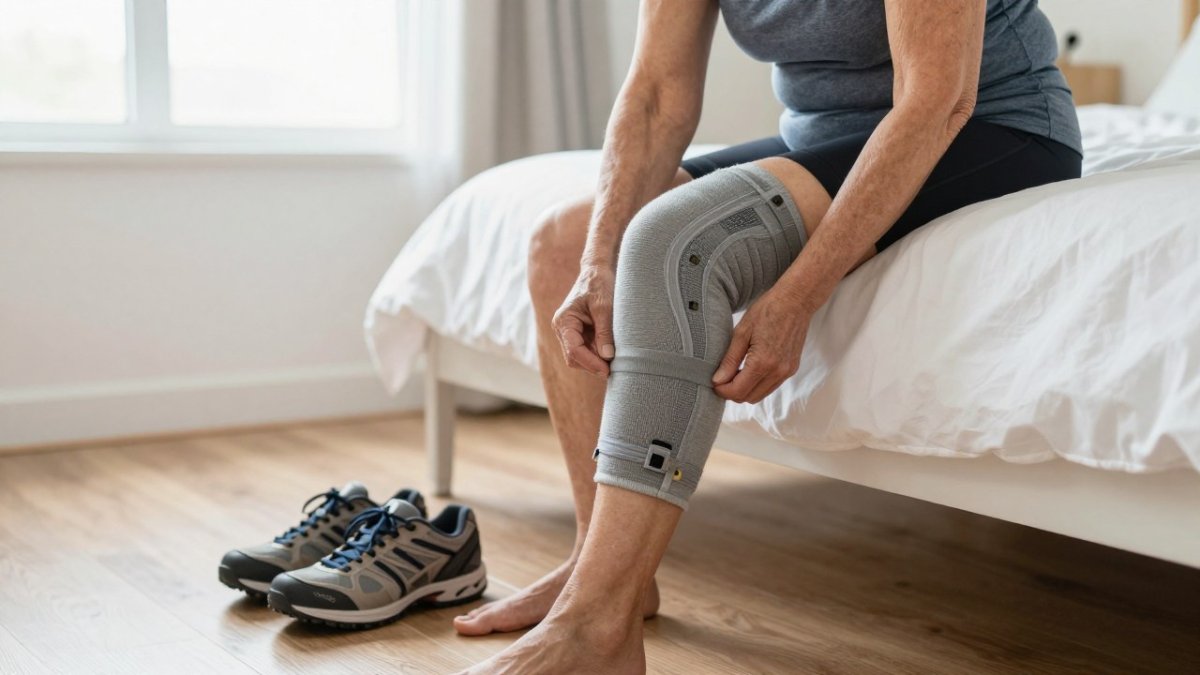
The more useful framing for arthritis is that wear time is activity-based, not clock-based. A brace is a tool for the hours your knee is loaded, walking, standing, climbing stairs, gardening, and it comes off when the knee is unloaded.
A Practical Daily Wear Schedule for Arthritis
Use this as a starting point, then adjust to what your knee tells you:
- Morning (30-60 minutes): Put the brace on before your first walk or household tasks. If mornings are your stiffest time, this is often the highest-value block of the day.
- Midday (1-2 hours): Wear it for errands, shopping, or yard work. Take it off when you sit down to rest.
- Afternoon (30-60 minutes): Use it for a second walk or physical therapy exercises.
- Evening: Remove it. Let the skin breathe and check for red marks.
- Overnight: Skip it unless a clinician told you otherwise.
Most people do not need to wear a brace at night. Sleep is when your knee rests, not when it needs extra support.
Matching Wear Time to the Activity, Not the Clock
Think in terms of three activity buckets rather than a fixed number of hours:
- Walking and errands: Wear the brace for the duration of the walk or outing, then remove it when you sit down. A 20-minute walk and a 90-minute trip to the store are both "one block", the brace goes on at the door and comes off when you are back home.
- Exercise and physical therapy: Wear it for the session if your clinician recommends it, and take it off during floor work, stretching, or any movement where the brace shifts or digs in. Many people find a sleeve is enough here and a hinged brace is overkill.
- Symptom-free periods: On a good day with no pain and no instability, you can often skip the brace entirely. The goal is support when the knee is challenged, not constant wear.
A common pattern is to wear the brace on flare days and during planned activity, and to leave it in the drawer on quiet days. That keeps the brace useful and keeps your muscles doing their share of the work.
Adjusting Wear Time for Flares and Good Days
- Flare day: Shorten each block to 30-45 minutes and remove the brace between blocks. If pain is sharp or the knee is swollen, the brace is not a substitute for rest and a call to your clinician.
- Good day: Use the brace only for the activity that usually provokes symptoms, and skip it for low-demand tasks around the house.
- Travel or long standing: Split wear into 60-90 minute blocks with a 15-minute break, and check the skin at each break.
Watch out: if you find yourself reaching for the brace from morning to night every day, that is a signal to reassess the fit, the brace type, or whether the muscles around the knee need strengthening, not a signal to wear it longer.
Here is a practical daily wear schedule you can use as a starting point, then adjust to what your knee tells you.
| Time of day | Wear time | What to do |
|---|---|---|
| Morning | 30-60 minutes | Put brace on before first walk or household tasks |
| Midday | 1-2 hours | Wear for errands, shopping, or yard work |
| Afternoon | 30-60 minutes | Use for a second walk or physical therapy |
| Evening | None | Remove it, let skin breathe, check for red marks |
| Overnight | None | Skip unless a clinician told you otherwise |
Types of Knee Braces for Osteoarthritis
Three main types cover most osteoarthritis needs: sleeves, hinged braces, and unloader braces. Each does a different job, and matching the brace to your arthritis pattern matters more than brand or price.
How Each Design Actually Works
- Knee sleeve or compression support: A fabric tube that adds warmth, light compression, and a gentle reminder of joint position. It does not change alignment or offload cartilage. Best for mild, activity-related pain and for people who want something they can wear under clothing.
- Hinged brace: Rigid side bars with a hinge at the knee. It controls side-to-side and front-to-back motion, which helps when the knee feels unstable or gives way. It does not shift load away from worn cartilage.
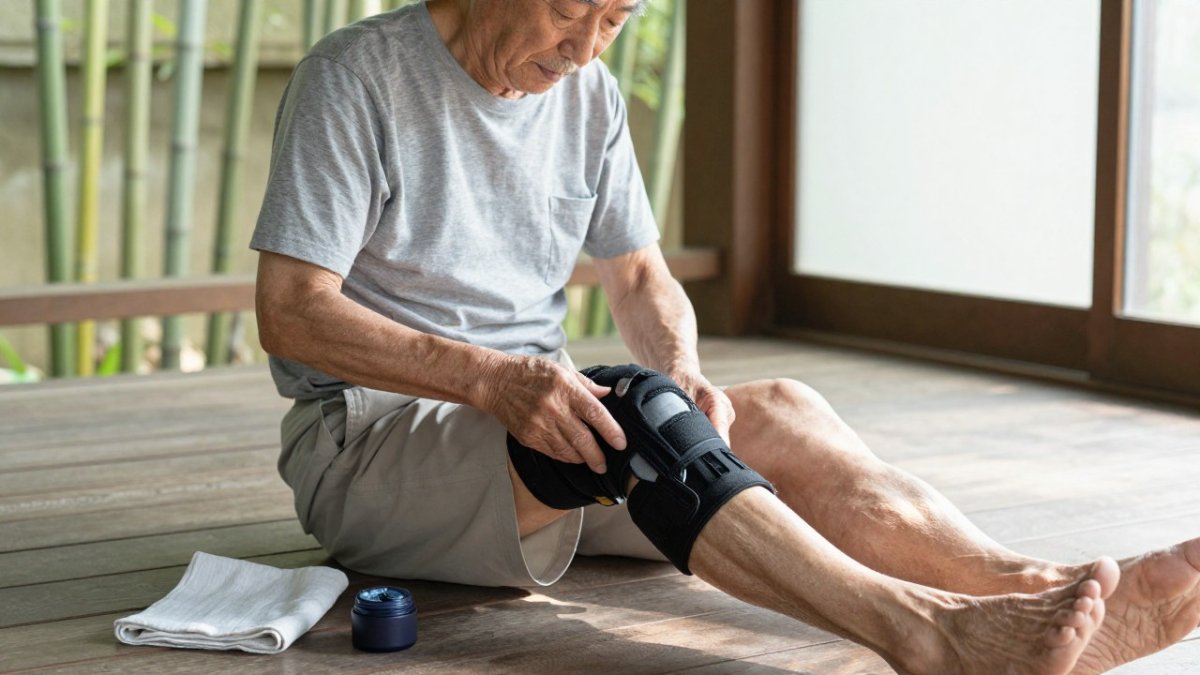
- Unloader brace: A hinged brace with a strap or shell that pushes the joint slightly outward or inward. The goal is to move pressure off the worn side of the joint and onto the healthier side. It is the most mechanically ambitious design and the one most dependent on a correct fit.
Matching the Brace to Your Arthritis Pattern
- Mild pain, activity-related: A simple knee sleeve or knee support adds warmth and light compression.
- Moderate pain with mild instability: A hinged brace gives side-to-side support.
- Pain on one side of the joint: An unloader brace shifts load away from the worn side.
- Buckling or giving way: A stabilizing brace with hinges is the safer pick.
- Pain mostly behind the kneecap: A patellar brace or sleeve with a kneecap cutout can help tracking, though evidence for arthritis specifically is limited.
A common mistake is buying the stiffest brace available. For mild arthritis, a bulky brace can weaken your muscles over time and feel miserable to wear. Start simple.
Choosing Between a Sleeve, Hinge, and Unloader
Ask three questions before you buy:
- Where does it hurt? Pain on the inner or outer side of the joint points toward an unloader; pain that is diffuse or activity-related points toward a sleeve.
- Does the knee feel unstable? If it buckles or gives way, a hinge is doing real work that a sleeve cannot.
- How much bulk will you tolerate? An unloader that stays in the closet helps no one. A sleeve you actually wear beats a brace you don't.
Watch out: an unloader brace fitted without a clinician or trained fitter can push pressure onto the wrong side of the joint and create new pain. Have the fit checked before you rely on it for daily activity.
When an Unloader Knee Brace Makes Sense
An unloader knee brace makes sense when arthritis damage sits mostly on one side of the knee.
These braces work best for people with mild to moderate osteoarthritis and a clear "one-sided" pain pattern. They are bulkier and cost more than a sleeve.
Watch out: a poorly fitted unloader brace can cause new pain on the opposite side of the knee. Have a clinician or trained fitter adjust it before you rely on it.
How to Tell Whether the Brace Is Actually Helping
A brace is helping if you can walk farther, climb stairs more easily, or finish activities with less pain than before. Judge it over one to two weeks, not one afternoon.
Track three things in a notebook or phone note:
- How far you walked or how long you stayed active
- Your pain level before and after activity, on a 1-10 scale
- Whether your knee felt steadier or gave way
If those numbers improve, the brace is earning its place. If nothing changes after two weeks of consistent use, the fit or the type is probably wrong.
For more at-home strategies alongside your brace routine, see our guide on how to relieve arthritis joint pain at home.
Warning Signs of Poor Fit or Too Much Wear
Stop and reassess if you notice any of these:
- Deep red marks or grooves that last more than 30 minutes after removal
- Numbness, tingling, or cold skin below the brace
- New pain at the top or bottom edge of the brace
- Swelling that gets worse with wear
- Muscle weakness after weeks of all-day use
Watch out: wearing a brace from morning to night, every day, can let the muscles around your knee weaken. The brace should assist your leg, not replace it.
Caring for Your Brace and Knowing When to Replace It
Wash fabric sleeves every few days with mild soap and cold water, then air dry. Heat ruins elastic. Wipe hinged and hard-shell braces with a damp cloth and check the straps for fraying.
Replace a brace when straps stretch out, hinges loosen, or the fit no longer feels snug. A worn-out brace stops doing its job quietly.
Choosing a Topical to Pair With Your Brace Routine
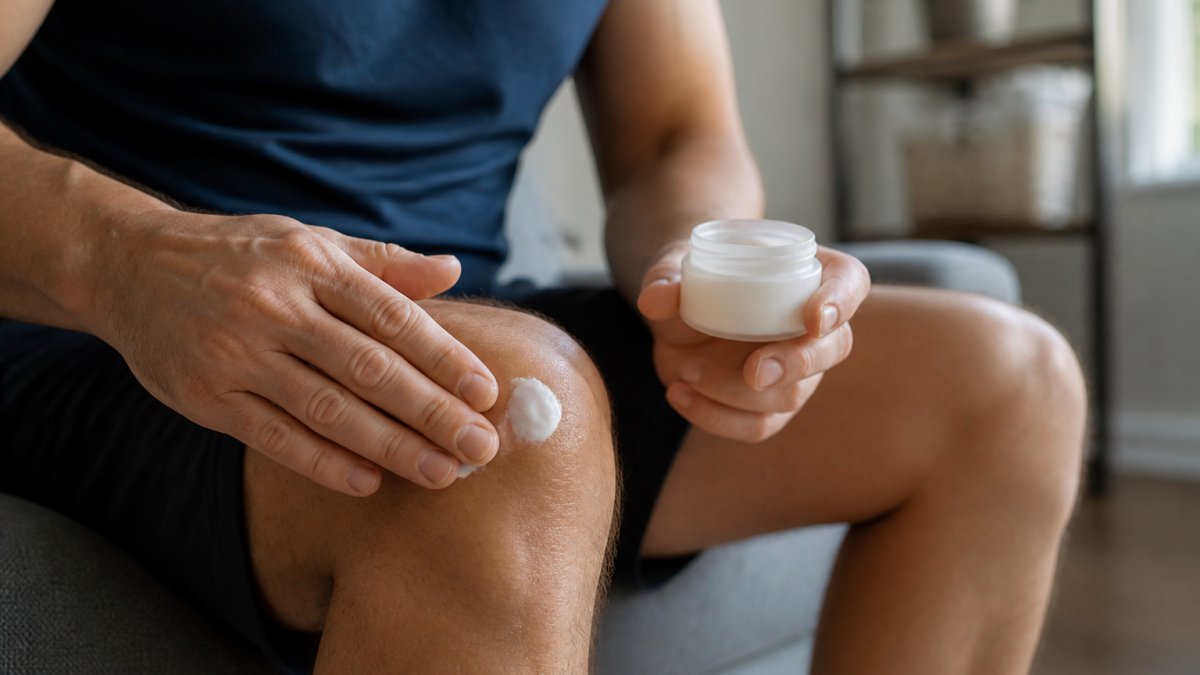
A topical can be used alongside a brace routine, such as in the evening when the brace comes off.
Graphoenix LLC offers topical products formulated with large-flake graphene nanocarbon technology.
If you are also watching your diet, our article on 12 foods to avoid if you have arthritis pairs well with any brace routine.
Your knee does not have to dictate your day.
Frequently Asked Questions
Will a knee brace help with my arthritis?
A knee brace can ease activity-related pain and improve joint stability for some people with osteoarthritis, especially during walking, exercise, or long days on your feet. It supports the joint and may reduce buckling or giving way. It does not reverse cartilage damage, so treat it as one part of a plan that includes movement, strength work, and guidance from your healthcare provider. Track your pain before and after wear to see whether it earns a place in your routine.
Should I wear a knee brace all day and night?
No. Most people with arthritis do best wearing a brace during activities that provoke symptoms, then removing it for rest, sleep, and skin checks. Wearing a knee brace all day and night can cause sweating, skin irritation, and dependence on external support. A common approach is a few hours of wear around activity, not continuous use. If a clinician has given you a specific schedule after injury or surgery, follow that instead.
What type of knee brace is best for osteoarthritis?
It depends on your arthritis pattern. A simple knee sleeve or support suits mild pain and general activity. A patellar brace helps if pain sits around the kneecap and tracking is an issue. An unloader knee brace is designed for unicompartmental osteoarthritis, where pressure redistribution away from the worn side of the joint matters. Fit and comfort decide as much as the category, so try the brace during the activity you plan to use it for.
Can an unloader knee brace help with bone-on-bone arthritis?
An unloader knee brace can reduce load on the affected compartment and may ease pain for some people with advanced osteoarthritis, including bone-on-bone changes. Results vary, and the brace works best when fitted correctly and used during weight-bearing activity. It is not a cure and does not rebuild cartilage. Ask your healthcare provider whether an unloader design fits your joint pattern, and judge it by whether walking and daily function improve over a few weeks.