 Comparison
Graphene Cream vs Arthritis Medication: What Works Better
Last Updated: November 19, 2026
Quick Summary
Graphene cream delivers localized relief through the skin over a sore joint, while standard arthritis medication works systemically through the bloodstream. Neither wins outright: topicals suit superficial joints like knees and hands with minimal stomach risk, but they cannot replace prescription drugs for severe or whole-body inflammation.
- Topicals carry fewer stomach-related risks because little reaches the digestive tract.
- Oral NSAIDs can cause upset, bleeding, or ulcers and interact with blood thinners.
- Published graphene joint research is mostly laboratory and animal work, not finished creams.
- FDA-approved topical NSAIDs like diclofenac gel have randomized trials and labeled dosing.
- Tell your pharmacist about every product, since stacking topical and oral NSAIDs raises exposure.
Table of Contents
- How Graphene Cream and Arthritis Medication Approach Pain Differently
- Graphene Cream for Arthritis Pain: What It Is and How It Works
- Topical vs Oral Arthritis Medication: Absorption, Side Effects, and Interactions
- The Benefits of Graphene Nanocarbon Technology for Joint and Skin Health
- Graphene Cream vs Standard Arthritis Medication: A Side-by-Side Comparison
- Evidence, Study Limitations, and What the Research Does Not Prove
- Which Option Fits Your Arthritis Type and Medication Routine
- Choosing Your Graphene Cream and Starting Your New Routine
- Frequently Asked Questions
How Graphene Cream and Arthritis Medication Approach Pain Differently
Arthritis pain relief comes down to a single question: do you treat the whole body or the joint that hurts? Oral arthritis medication works systemically, traveling through your bloodstream to reduce inflammation everywhere.
That difference shapes everything else, from how fast you feel results to which side effects you risk. Below, we break down how each approach works, what the research actually supports, and how to pick the right one for your joints and your current medication routine.
Graphene Cream for Arthritis Pain: What It Is and How It Works
Graphene cream for arthritis pain is a topical formulation that infuses graphene nanocarbon into a skin-friendly base, applied directly over a painful joint.
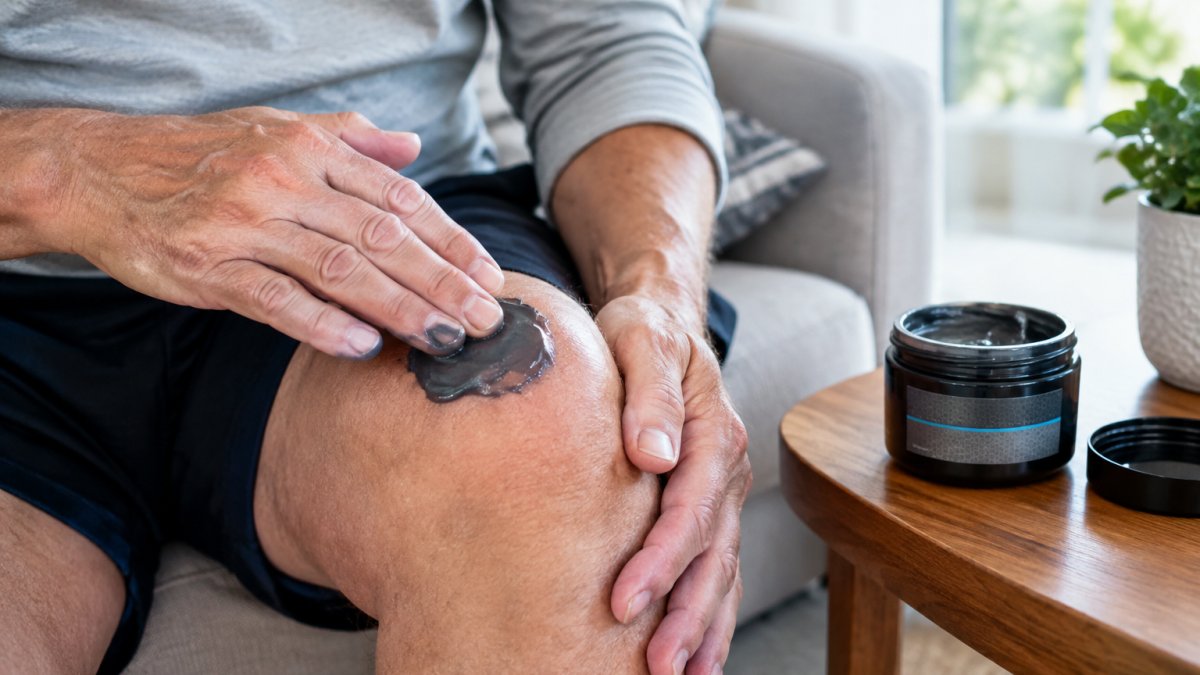
What most guides miss is that "graphene" covers wildly different materials. If you want the deeper background on this ingredient, read our guide to graphene cream for arthritis pain before you buy anything.
Topical vs Oral Arthritis Medication: Absorption, Side Effects, and Interactions
Topical treatments deliver active ingredients through the skin near the joint, while oral medications travel through the digestive system and reach the whole body. That single difference explains why topicals carry fewer stomach-related risks and why orals tend to act more broadly.
How Topical Treatments Are Absorbed Through the Skin
Skin absorption is selective. A cream crosses the outer skin layers and reaches tissue close to the surface, which is why superficial joints respond best. Deep hip or spine pain is a harder target for any topical. If you are weighing how quickly a topical can act, our breakdown of how fast topical pain relief works covers the timeline in detail.
Side Effects and Drug Interactions to Watch For
The most common topical complaint is skin irritation: redness, dryness, or stinging where the cream goes on. Oral NSAIDs carry a different profile. Oral anti-inflammatory drugs can upset the stomach and, in some cases, cause bleeding or ulcers, a concern worth raising with your pharmacist. Never stack a new topical on top of prescription medication without checking interactions first.
The Benefits of Graphene Nanocarbon Technology for Joint and Skin Health
Many people with arthritis also deal with dryness, itching, or slow-healing skin.
Here is what the approach offers in practice:
A common mistake is buying a topical for one symptom only.
Graphene Cream vs Standard Arthritis Medication: A Side-by-Side Comparison
Neither option wins outright. The right choice depends on which joints hurt, how your stomach handles oral drugs, what other medicines you take, and how much control you want over where relief lands.
| Factor | Graphene Cream | Standard Oral Arthritis Medication |
|---|---|---|
| Delivery route | Absorbed through skin over the joint | Systemic via bloodstream after swallowing |
| Active ingredients | Graphene nanocarbon in a cream base; carrier ingredients vary by product | Diclofenac, ibuprofen, naproxen, acetaminophen, or prescription drugs such as methotrexate or biologics, depending on the condition |
| Best for | Superficial joints, knees, hands, fingers, elbows | Widespread or deep joint pain; inflammatory arthritis that needs systemic control |
| Stomach risk | Minimal, because little reaches the digestive tract | Can cause upset, bleeding, or ulcers with NSAIDs; acetaminophen carries liver risk at high doses |
| Onset | Gradual, localized; users typically report changes over days to weeks | Varies by drug, NSAIDs often within hours, disease-modifying drugs over weeks to months |
| Skin reactions | Possible irritation, redness, or dryness where applied | Not applicable |
| Regulatory status | Sold as a cosmetic or general topical in most cases; not an FDA-approved arthritis drug | NSAIDs and prescription drugs are FDA-regulated, with labeled dosing and warnings |
| Evidence quality | Limited human data specific to topical graphene; mostly laboratory and preclinical work plus user reports | Human clinical trials and post-market surveillance for approved drugs |
| Prescription needed | No | Often yes for prescription-strength options |
| Interaction profile | Low systemic absorption limits interaction risk, but carrier ingredients can still irritate skin | Significant, NSAIDs interact with blood thinners, ACE inhibitors, and other drugs |
The honest limitation: topicals will not replace a prescription for severe, whole-body inflammation or for inflammatory arthritis that needs disease-modifying therapy. Where they shine is targeted relief with fewer systemic trade-offs.
How the Comparison Changes by Arthritis Type
Osteoarthritis of the knee or hand is the setting where topical options are most often studied and most often used, because the joint sits close to the skin. Rheumatoid arthritis and psoriatic arthritis are systemic conditions; a cream can soothe a sore knuckle but does not modify the disease, and anyone with these diagnoses should treat topicals as an add-on, not a substitute.
How the Comparison Changes With Your Current Medication Routine
If you take a daily oral NSAID, adding a topical does not automatically mean you can cut the pill dose, that decision belongs to your prescriber. A common pattern is to use a topical on one or two flare-prone joints while keeping systemic therapy unchanged, then review with a clinician whether the oral dose can be reduced. Watch out: stacking a topical NSAID cream on top of an oral NSAID of the same drug class can raise total exposure without anyone noticing, so tell your pharmacist about every product you use, including over-the-counter rubs.
What the Comparison Cannot Tell You
No table can predict your response. Individual variation in skin absorption, joint depth, and pain perception is large, and the published evidence for topical graphene specifically is far thinner than for diclofenac gel or capsaicin cream. Treat the comparison as a framework for a conversation with your clinician or pharmacist, not as a verdict.
Evidence, Study Limitations, and What the Research Does Not Prove
Here is where we separate marketing from medicine. Much of the striking graphene research involves graphene foam, films, and bioscaffolds tested in laboratory dishes or animal models, not finished creams sold to consumers. A study showing that a graphene scaffold supports cartilage cell growth in a petri dish is not proof that a topical cream regrows cartilage in a human knee.
A Simple Evidence Hierarchy for Topical Products
When you read a claim about any arthritis cream, sort it into one of these tiers:
- Human randomized controlled trials on the finished product, the strongest evidence, and the tier where most topical graphene creams have little or no published data.
- Human trials on a similar ingredient or delivery system, useful context, but not a guarantee for a different formulation.
- Animal studies, can show a mechanism is plausible, cannot establish human relief or safety.
What the Graphene Research Actually Shows
The published graphene work relevant to joints falls mainly into the first three laboratory tiers: scaffolds for cartilage tissue engineering, conductive films for biosensors, and composite materials for implants. That research is genuinely promising for regenerative medicine, but it does not transfer directly to a cream you rub on your knee. The material in those studies is often graphene oxide or a reduced form, which behaves differently from the pristine, large-flake graphene used in some consumer topicals, and graphene oxide has its own safety questions in the literature.
What Standard Arthritis Medications Have That Graphene Creams Do Not
FDA-approved topical NSAIDs such as diclofenac gel have gone through randomized trials, have labeled dosing, and carry post-market safety surveillance. That does not make them risk-free, skin irritation and, rarely, systemic effects are documented, but it means the evidence base is transparent and the risks are quantified. A cosmetic or general topical graphene cream is not held to the same standard, so the burden falls on the buyer to read the ingredient list and ask what testing has been done.
How to Judge Certainty for Yourself
Ask three questions of any product: Is there a published human trial on this exact formulation, or only on related materials? Does the seller distinguish pristine graphene from graphene oxide and disclose the carrier ingredients? And does the claim describe a plausible mechanism, or promise a cure? A product that answers all three honestly is worth a fair trial; one that cannot answer any of them is a marketing exercise.
The Limits We Acknowledge
Evidence grading for topical graphene creams is thin, and individual response varies widely. We will not pretend otherwise. Customers generally give positive feedback about our products, and some find a product does not meet their needs. Treat any topical as a trial: give it a fair window, track what changes, and stop if your skin reacts. And keep the distinction clear in your own mind, a cream that helps you feel better is a legitimate comfort tool, but it is not the same thing as a proven disease-modifying treatment.
Which Option Fits Your Arthritis Type and Medication Routine
Match the tool to the joint. Knee arthritis and small joints in the hands respond well to topicals because they sit close to the skin. Larger joints and deep pain may need oral or prescription support.
For readers building a broader plan, our guide on how to relieve arthritis joint pain at home pairs well with whichever topical or medication you choose.
Choosing Your Graphene Cream and Starting Your New Routine
Before you buy from any provider, check four things: synthetic ingredients, evidence of effectiveness, how other buyers rate it, and whether it absorbs without feeling greasy or sticky. Watch out: skipping the ingredient check is how people end up with fillers and false claims. Ask whether the graphene is pristine flake or graphene oxide, and verify the seller explains the difference.
Start with one area, apply consistently, and give it a realistic window before judging results.
Arthritis pain rarely has a single fix, and the smartest routine often combines targeted topical relief with whatever your doctor prescribes. Graphoenix LLC formulates pristine, large-flake graphene nanocarbon topicals that support pain, itching, mobility, and skin recovery in one jar, with multi-use formulas and no greasy residue.
Frequently Asked Questions
Is graphene cream FDA-approved for arthritis pain management?
No graphene cream is currently FDA-approved as a drug for arthritis pain. In the U.S., topical pain products are typically regulated as cosmetics or over-the-counter drugs depending on their claims and ingredients, not as prescription arthritis treatments. That means the evidence base is different from FDA-approved medications like diclofenac gel. Ask the seller what testing backs their product, check the ingredient list for synthetics, and talk to your pharmacist or rheumatologist before replacing any prescribed medication.
Can graphene cream be used alongside oral arthritis medications?
Many people use a topical product alongside oral medication rather than instead of it. Because graphene cream is applied to the skin rather than swallowed, it does not pass through the stomach, which is where oral NSAIDs like ibuprofen can cause bleeding or ulcers. Still, tell your doctor and pharmacist about every topical you use, especially if you take blood thinners or have sensitive skin. A patch test on a small area for 24 hours is a sensible first step before applying it to a painful joint.
How does graphene cream differ from traditional topical arthritis treatments?
Traditional topical arthritis treatments rely on active ingredients such as diclofenac, capsaicin, menthol, or ibuprofen to block pain signals or reduce inflammation. Graphene cream takes a different route: it uses large-flake graphene nanocarbon, which the maker positions as supporting cellular regrowth. Note that most published graphene research involves experimental cartilage scaffolds, not creams. Judge any graphene cream on ingredient transparency, customer feedback, and how your own skin responds.
How long does it take to see results from a graphene cream?
Timelines vary by person and by the condition being treated. Customers have reported improved mobility in joints, including with arthritis. Individual response differs, and no cream replaces a diagnosis from a healthcare professional. Start with a patch test, apply as directed, and track your pain severity over two to four weeks so you have real data to compare against your current routine.